


 Menu
Menu
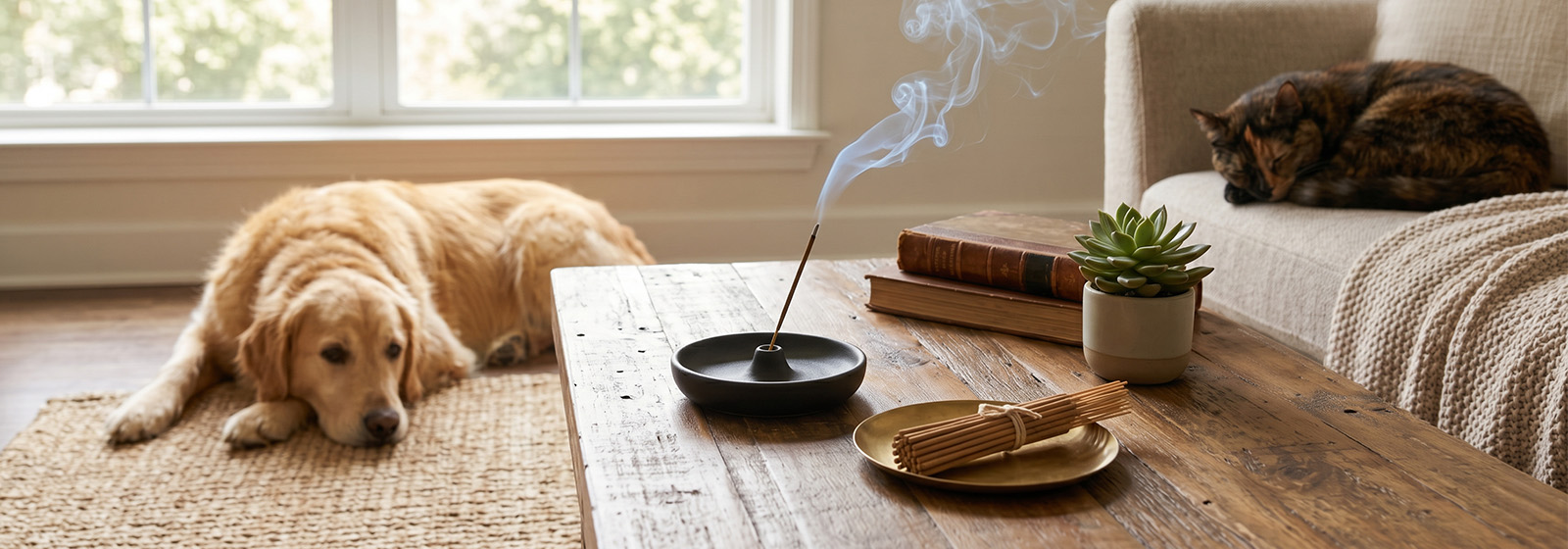
We all want our homes to be a sanctuary - a place that looks beautiful, feels cosy, and smells incredible. For many of us, that sanctuary is shared with our four-legged companions. But while lighting a fresh candle or burning a stick of incense might help you unwind after a long day, it is vital to remember that our pets experience the world, and its smells, very differently than we do.
A dog's sense of smell is tens of thousands of times more sensitive than ours, and cats lack a specific liver enzyme required to metabolise certain airborne compounds. Because of this, many common essential oils and heavily synthetic fragrances can be overwhelming, or even highly toxic, to our furry friends.
Here is everything you need to know to safely fragrance your home without compromising the health and happiness of your pets.
The "No-Go" List: Scents to Avoid
When it comes to essential oils and highly concentrated fragrances, cats are particularly vulnerable, though dogs are not entirely immune to scent toxicity either. It is crucial to read the ingredient lists on your candles, diffusers, and incense to ensure you are not accidentally introducing harmful vapours into your home.
Generally toxic to both cats and dogs:
Tea Tree:
Highly toxic and should be avoided in all forms around pets.
Eucalyptus:
Can cause severe respiratory irritation and neurological issues.
Peppermint & Wintergreen:
Often overwhelming and toxic if ingested or inhaled in high concentrations.
Pine & Sweet Birch:
Can lead to liver damage and severe skin irritation.
Citrus (for cats):
Oils derived from lemons, oranges, and grapefruits can be highly irritating and toxic to felines.
Ylang-Ylang & Cinnamon:
Best kept out of the house entirely if you have a cat.
The "Green Light" List: Pet-Friendly Aromas
Fortunately, keeping your pets safe does not mean you have to give up home fragrance altogether. There are plenty of beautiful, natural scent notes that are generally considered safe for pets when used responsibly.
Lavender:
Known for its calming properties, it is generally safe for dogs and cats and can even help soothe anxious pets.
Chamomile:
Gentle, floral, and deeply relaxing for both humans and animals.
Frankincense:
A woody, earthy resin that is typically safe to burn around pets and offers wonderful grounding energy.
Rosemary & Ginger:
Great herbaceous and spicy options that are generally well-tolerated by dogs.
Disclaimer: Every pet is unique. What is safe for one animal might trigger an allergy in another. Always consult your vet if you are unsure about introducing a new scent into your home.
Best Practices for a Pet-Safe Burn
Choosing the right scent is only half the battle; how you disperse that fragrance matters immensely.
Prioritise Ventilation
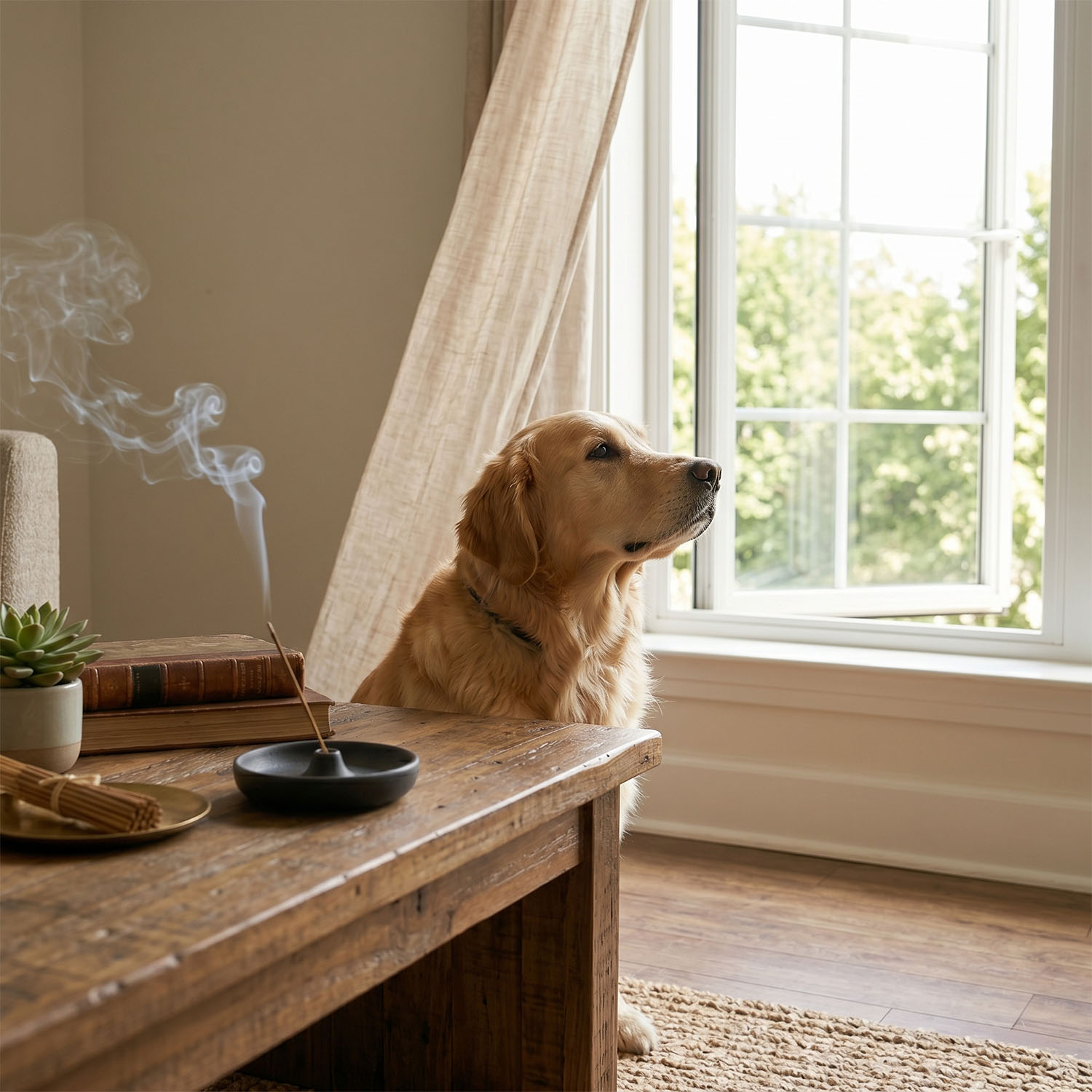
Never burn incense or candles in a closed, unventilated room with your pet. Always leave a door open so your dog or cat can freely leave the area if the scent becomes too much for them. Cracking a window to ensure fresh air circulation is also highly recommended.
Keep Them Out of Reach
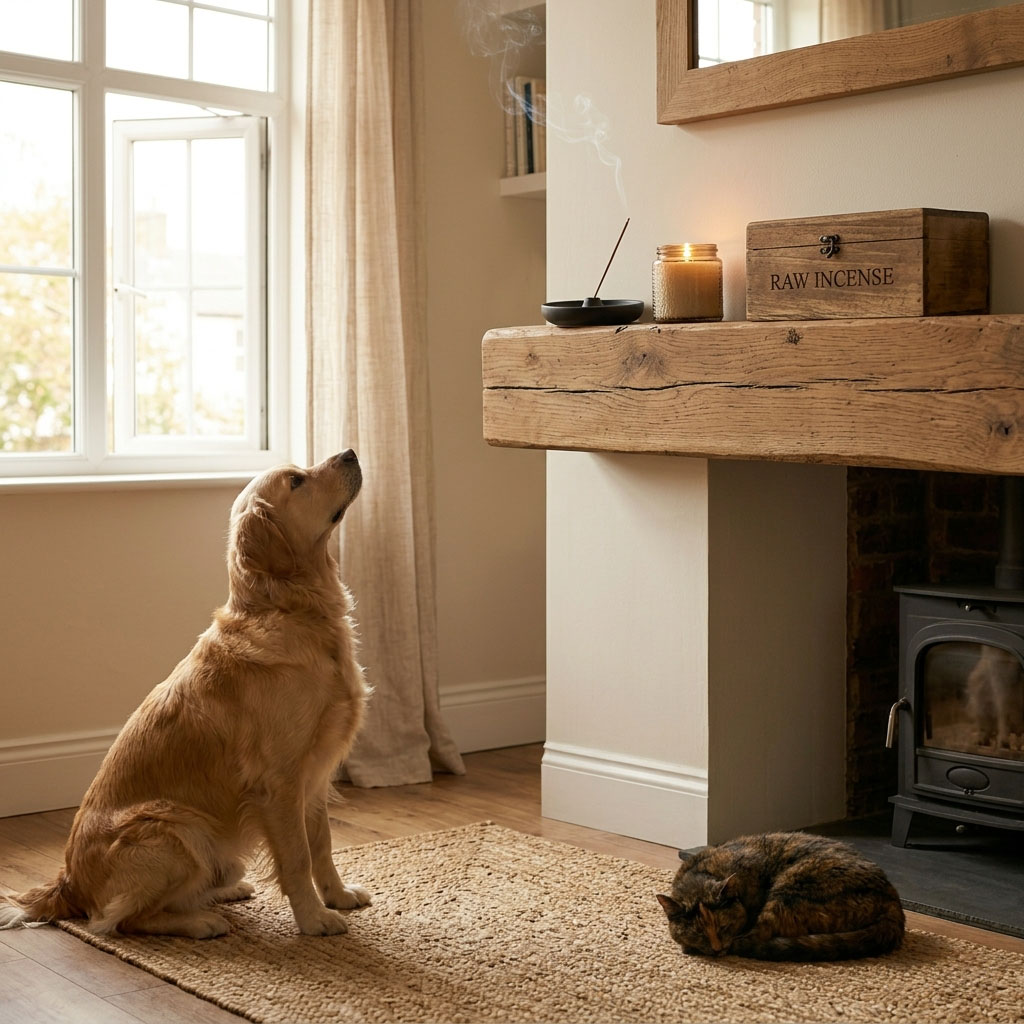
Curious paws and wagging tails are a recipe for disaster around open flames and hot wax. Ensure your candles and incense catchers are placed on high, stable surfaces. Additionally, store unlit candles and raw incense out of reach, as some pets might try to chew or eat them, leading to severe gastrointestinal issues.
Opt for Passive Diffusion
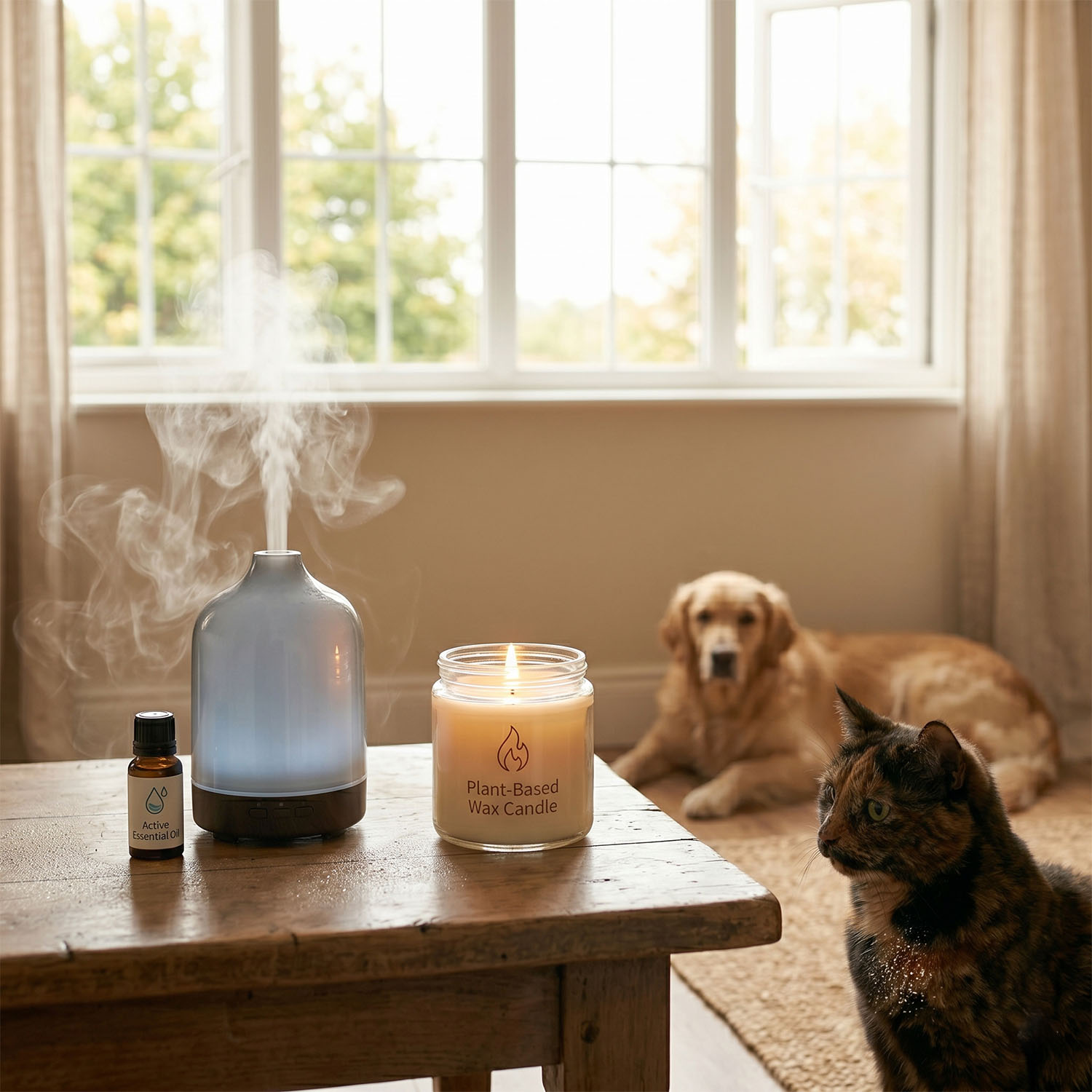
Active essential oil diffusers (the kind that mist water and oil directly into the air) can cause micro-droplets of concentrated oil to land on your pet's fur, which they might later ingest whilst grooming. Burning a high-quality, plant-based wax candle is generally a safer, more passive way to scent a room.
Spotting Scent Sensitivity
Even if you are using a pet-safe scent in a well-ventilated room, it is important to keep a watchful eye on your companion. Animals cannot tell us when they have a headache or feel nauseous, so we have to watch their behaviour.
If you light a new candle or incense and notice your pet exhibiting any of the following signs, extinguish the fragrance immediately and let in some fresh air:
- Sneezing, coughing, or wheezing
- Watery eyes or a runny nose
- Pacing, restlessness, or unusual whining
- Lethargy or sudden hiding
- Drooling or vomiting
Creating a mindful, beautifully scented space should never come at the expense of those who share it with us. By choosing the right ingredients, prioritising ventilation, and paying attention to your pet's cues, you can enjoy a fragrant, cosy home that keeps every member of the family safe and happy.
 Login to Leave the First Comment
More articles you may enjoy: