


 Menu
Menu
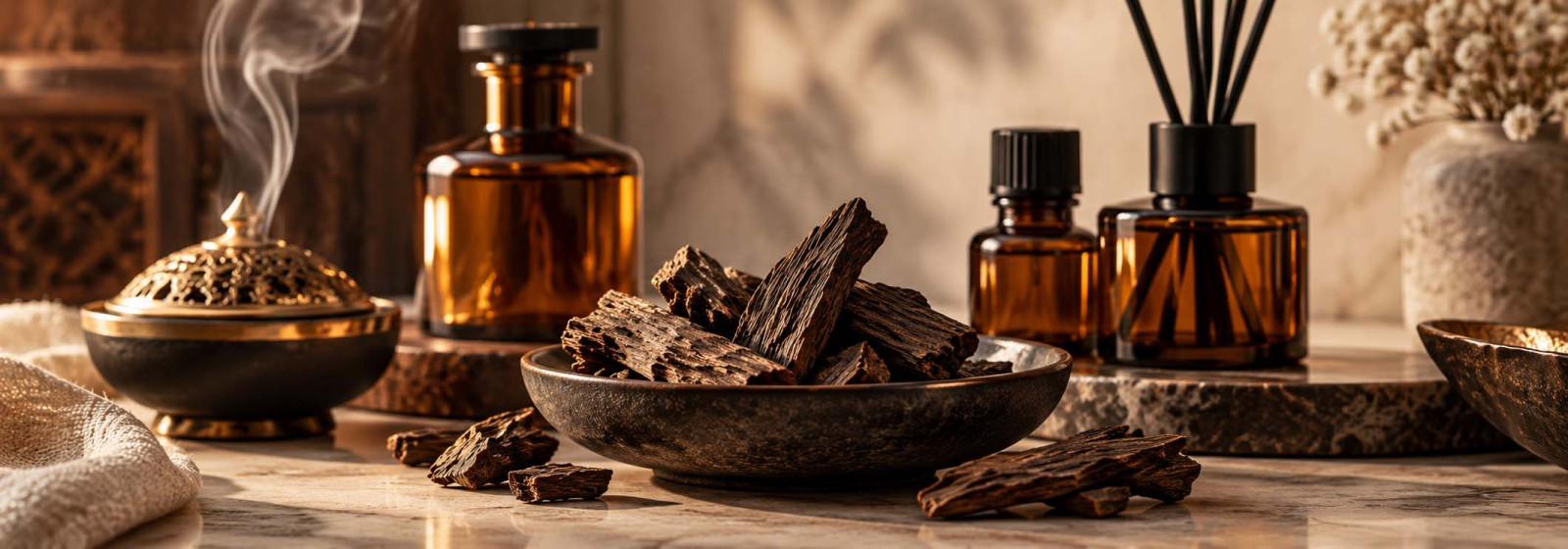
What is Oud?
Deep, woody and instantly distinctive, oud has become one of the most recognisable fragrance notes in modern home fragrance and perfumery. You may have spotted it in incense, room sprays, candles, fragrance oils and perfumes, often paired with notes such as rose, amber, musk, saffron or sandalwood.
But what exactly is oud, and what does it actually smell like?
Oud is closely associated with agarwood, a dark, aromatic resinous wood produced by certain trees when the wood responds to damage or biological attack. The resulting resin gives agarwood its characteristic rich fragrance and has traditionally been valued for incense and perfume.
But what exactly is oud, and what does it actually smell like?
Oud is closely associated with agarwood, a dark, aromatic resinous wood produced by certain trees when the wood responds to damage or biological attack. The resulting resin gives agarwood its characteristic rich fragrance and has traditionally been valued for incense and perfume.
Is Oud the Same as Agarwood?
The words oud, oudh and agarwood are often used closely together, although they are not always used in exactly the same way.
Agarwood generally refers to the resin-rich wood itself. Oud commonly refers to its fragrance, the oil distilled from agarwood, or simply the distinctive scent profile inspired by it.
This is why you might see products labelled with terms such as oud, oudh or agarwood even when they are different types of fragrance product.
It is also worth remembering that an oud-scented product does not necessarily contain natural agarwood oil. Many candles, room sprays, wax melts and fragrance oils use carefully created fragrance blends designed to reproduce the dark, woody character associated with oud.
Agarwood generally refers to the resin-rich wood itself. Oud commonly refers to its fragrance, the oil distilled from agarwood, or simply the distinctive scent profile inspired by it.
This is why you might see products labelled with terms such as oud, oudh or agarwood even when they are different types of fragrance product.
It is also worth remembering that an oud-scented product does not necessarily contain natural agarwood oil. Many candles, room sprays, wax melts and fragrance oils use carefully created fragrance blends designed to reproduce the dark, woody character associated with oud.
What Does Oud Smell Like?
There is no single smell that describes every oud fragrance. Depending on the blend, oud can range from smooth and softly woody to intensely dark, smoky and resinous.
Typical characteristics can include:
Typical characteristics can include:
Deep woody notes -
often the most noticeable part of an oud fragrance.
Warm resinous tones -
giving the scent richness and depth.
Smoky or earthy notes -
particularly in darker oud blends and incense.
Soft sweetness -
some oud fragrances have a subtly sweet or balsamic quality.
Leather-like or musky facets -
often found in more intense interpretations.
Because oud has such a strong character, it tends to feel fuller and more enveloping than bright citrus or delicate floral fragrances. If you enjoy warm woods, amber, resins and deeper incense scents, there is a good chance you will find something to like in the oud family.
Why Does Oud Smell Different From Product to Product?
One reason oud can be difficult to describe is that it is rarely presented completely on its own.
Fragrance makers often use oud as the darker foundation of a blend and soften, brighten or sweeten it with other notes. Two products both labelled “oud” can therefore smell surprisingly different.
For example, an oud and rose fragrance may feel rich but floral, while oud combined with sandalwood and amber can feel much warmer and smoother. Add saffron, musk or patchouli and the result can become spicier, earthier or more intense.
That variety is part of oud's appeal. You do not necessarily need to enjoy very heavy fragrances to enjoy oud; choosing the right accompanying notes can make a considerable difference.
Fragrance makers often use oud as the darker foundation of a blend and soften, brighten or sweeten it with other notes. Two products both labelled “oud” can therefore smell surprisingly different.
For example, an oud and rose fragrance may feel rich but floral, while oud combined with sandalwood and amber can feel much warmer and smoother. Add saffron, musk or patchouli and the result can become spicier, earthier or more intense.
That variety is part of oud's appeal. You do not necessarily need to enjoy very heavy fragrances to enjoy oud; choosing the right accompanying notes can make a considerable difference.
Popular Fragrance Pairings With Oud
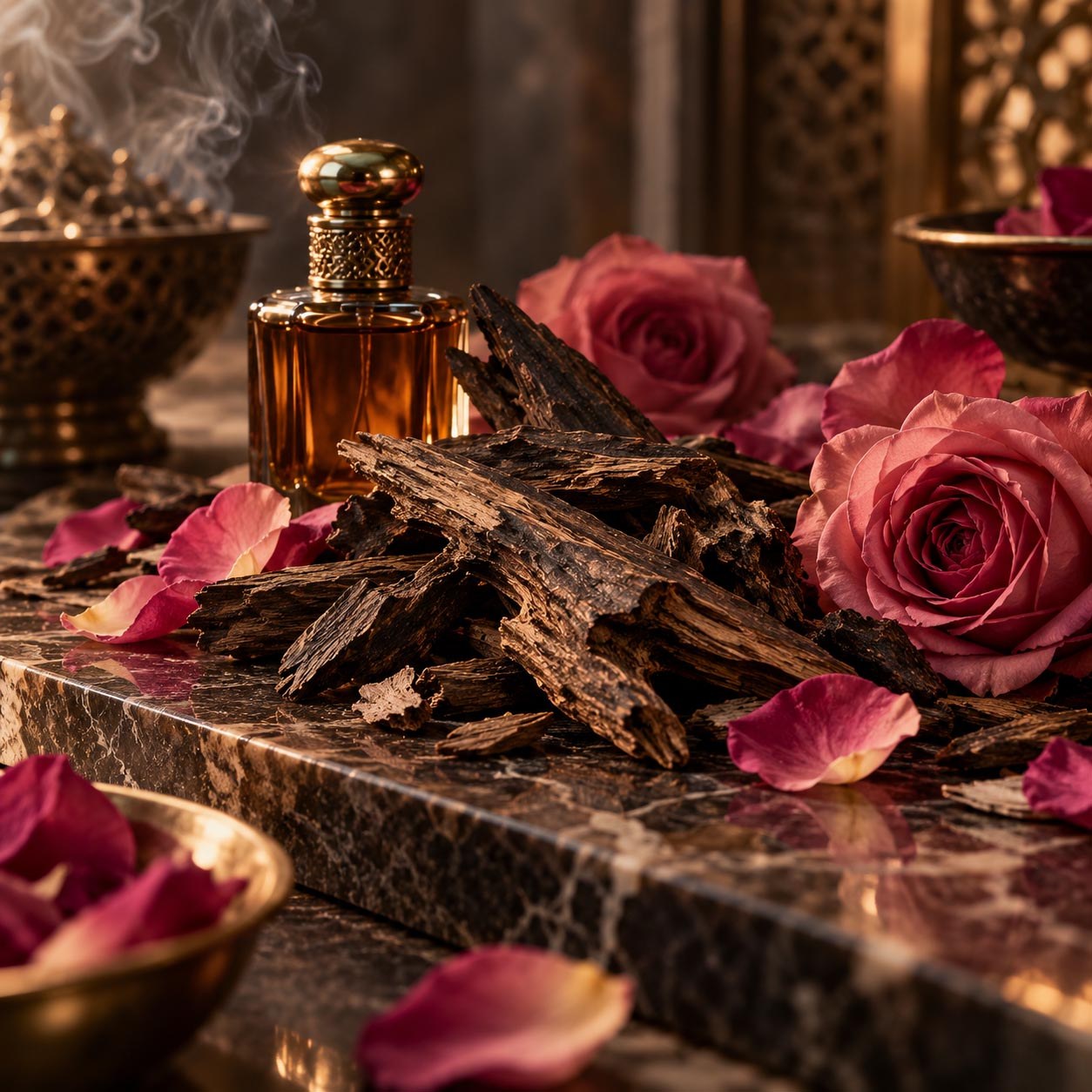
Oud & Rose
Rose adds a softer floral character to the darkness of oud. The contrast between rich woods and velvety florals creates a fragrance that can feel both warm and elegant.
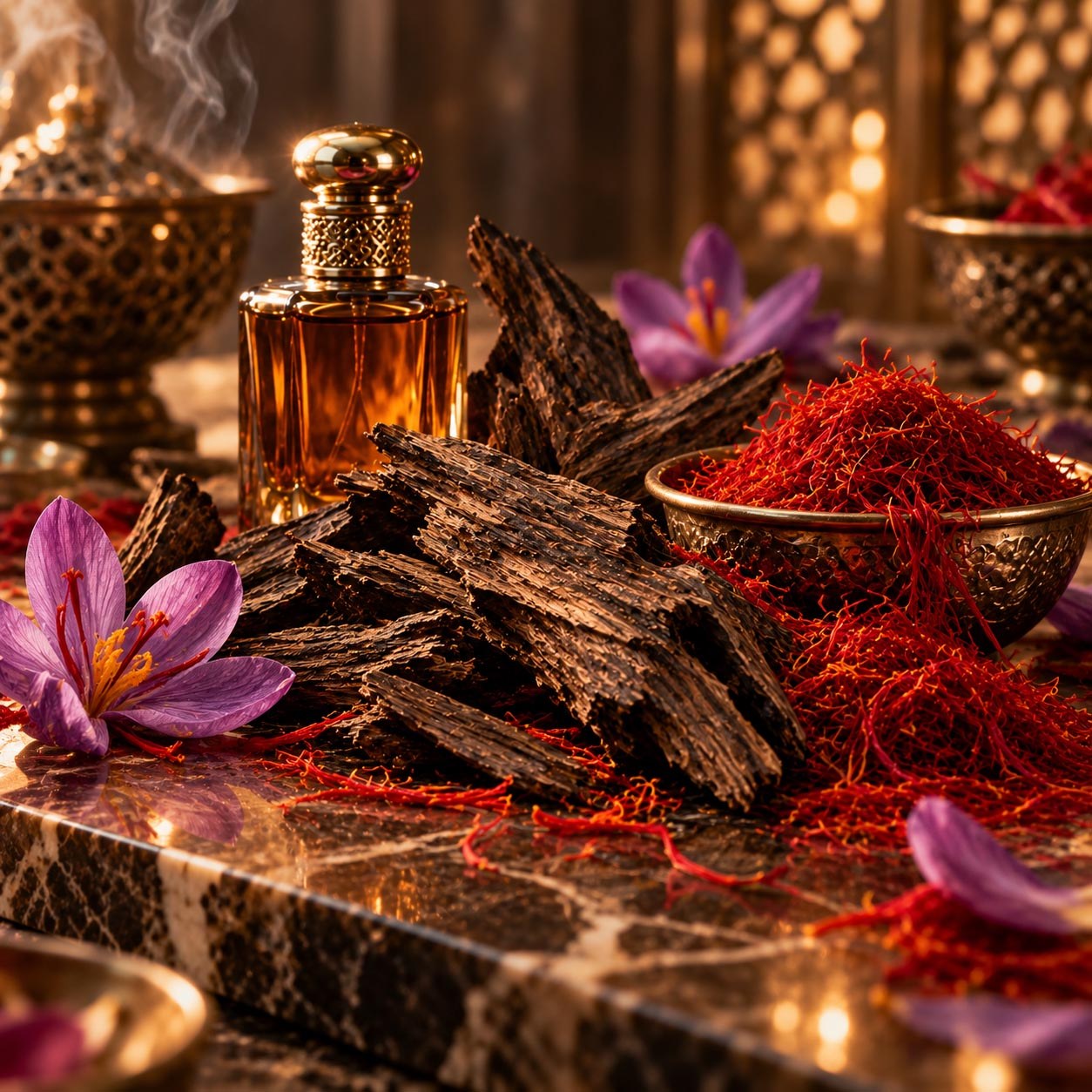
Oud & Saffron
Saffron brings a warm, slightly spicy quality that works particularly well with deeper woody fragrances. This combination often produces a rich and luxurious-feeling scent.
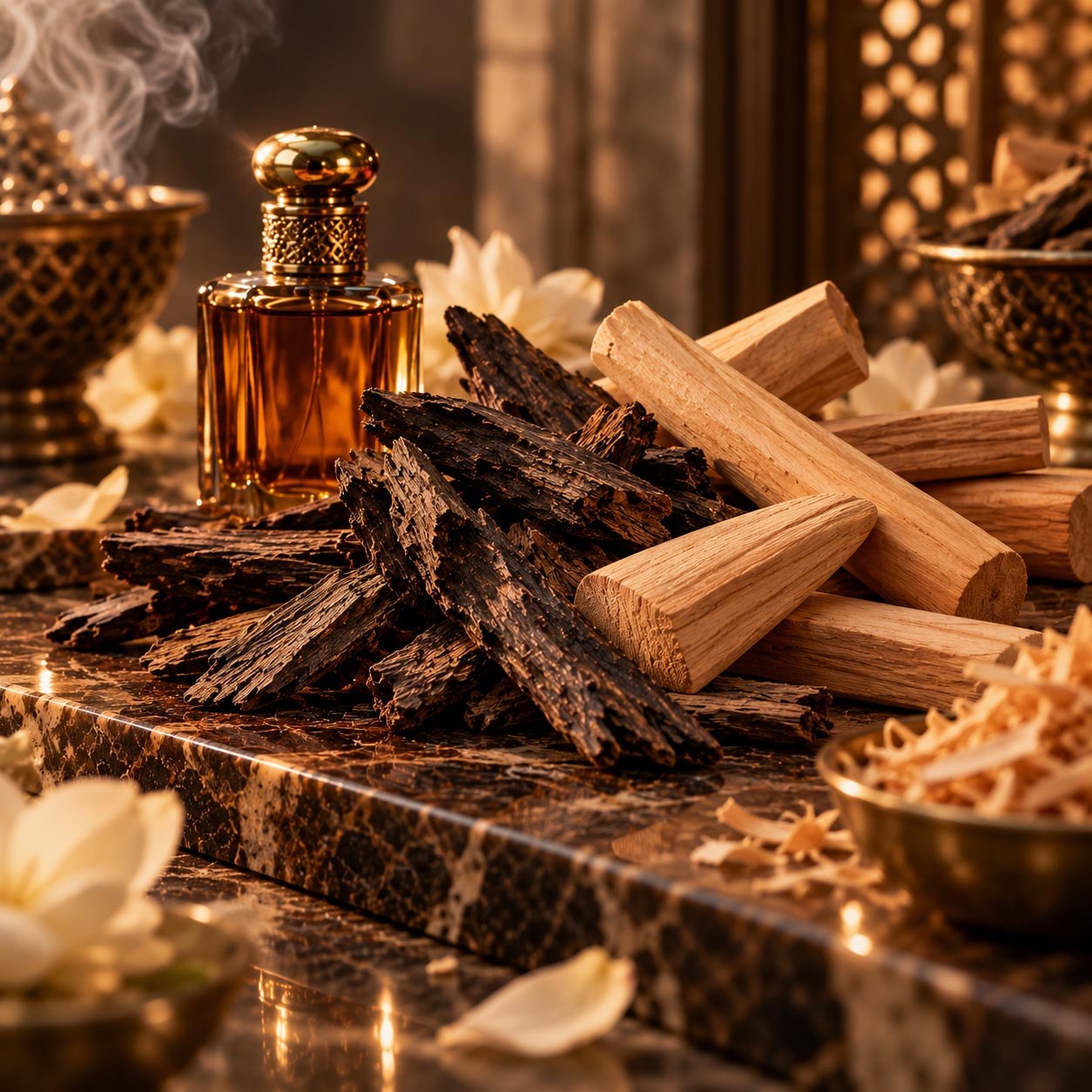
Oud & Sandalwood
Sandalwood can smooth out the sharper edges of an oud fragrance. Its creamy woody character makes this pairing a good option if you prefer something warm rather than intensely smoky.
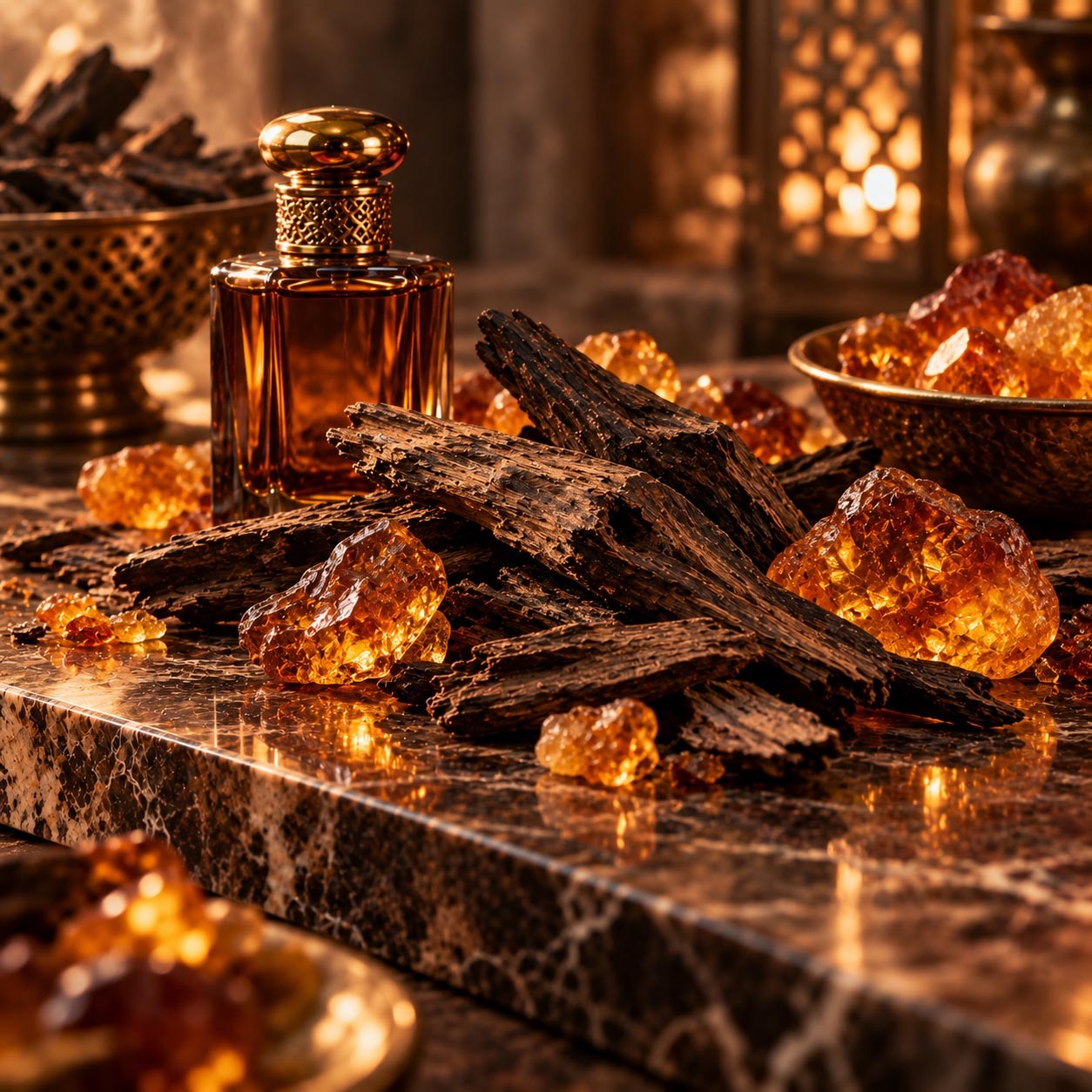
Oud & Amber
Amber-style notes introduce warmth and sweetness, creating a rounded fragrance that works particularly well during autumn and winter.
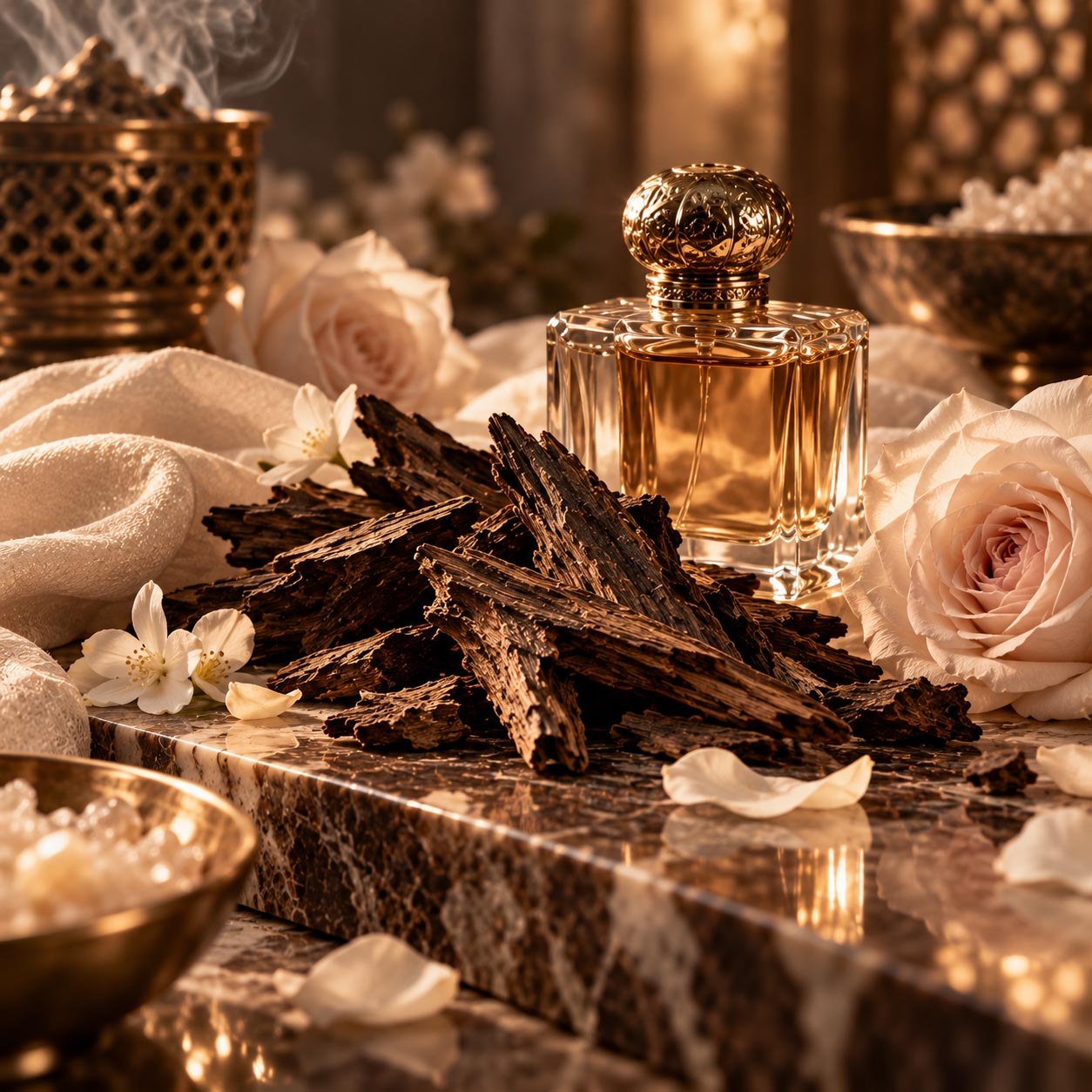
Oud & Musk
Musk can give oud a softer, more lingering character. It is commonly used to create smooth fragrances that feel rich without relying entirely on heavy woody notes.
Why Is Oud So Popular?
Oud stands apart from many familiar home-fragrance notes. Instead of smelling immediately fresh, fruity or floral, it offers depth and complexity.
It can make a room feel warm and atmospheric, which makes oud particularly appealing for living rooms, hallways and evening spaces. It is also a natural fit for incense, where woody and resinous aromas already play an important role.
The huge variety of oud blends has also helped broaden its appeal. Someone who finds a very dark, smoky oud overwhelming may prefer a softer rose, vanilla or sandalwood interpretation instead.
It can make a room feel warm and atmospheric, which makes oud particularly appealing for living rooms, hallways and evening spaces. It is also a natural fit for incense, where woody and resinous aromas already play an important role.
The huge variety of oud blends has also helped broaden its appeal. Someone who finds a very dark, smoky oud overwhelming may prefer a softer rose, vanilla or sandalwood interpretation instead.
Oud in Incense
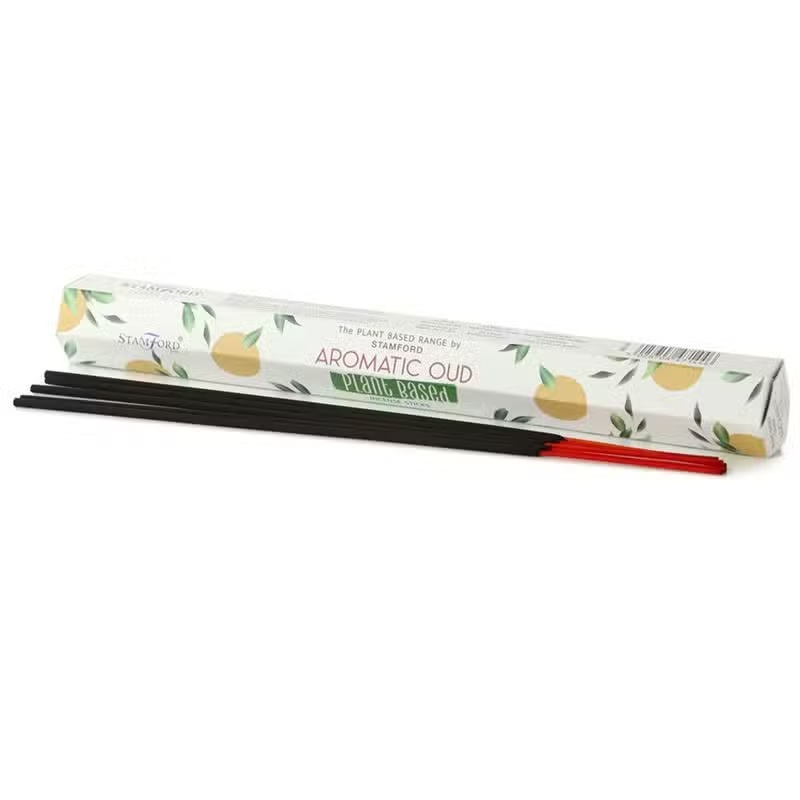
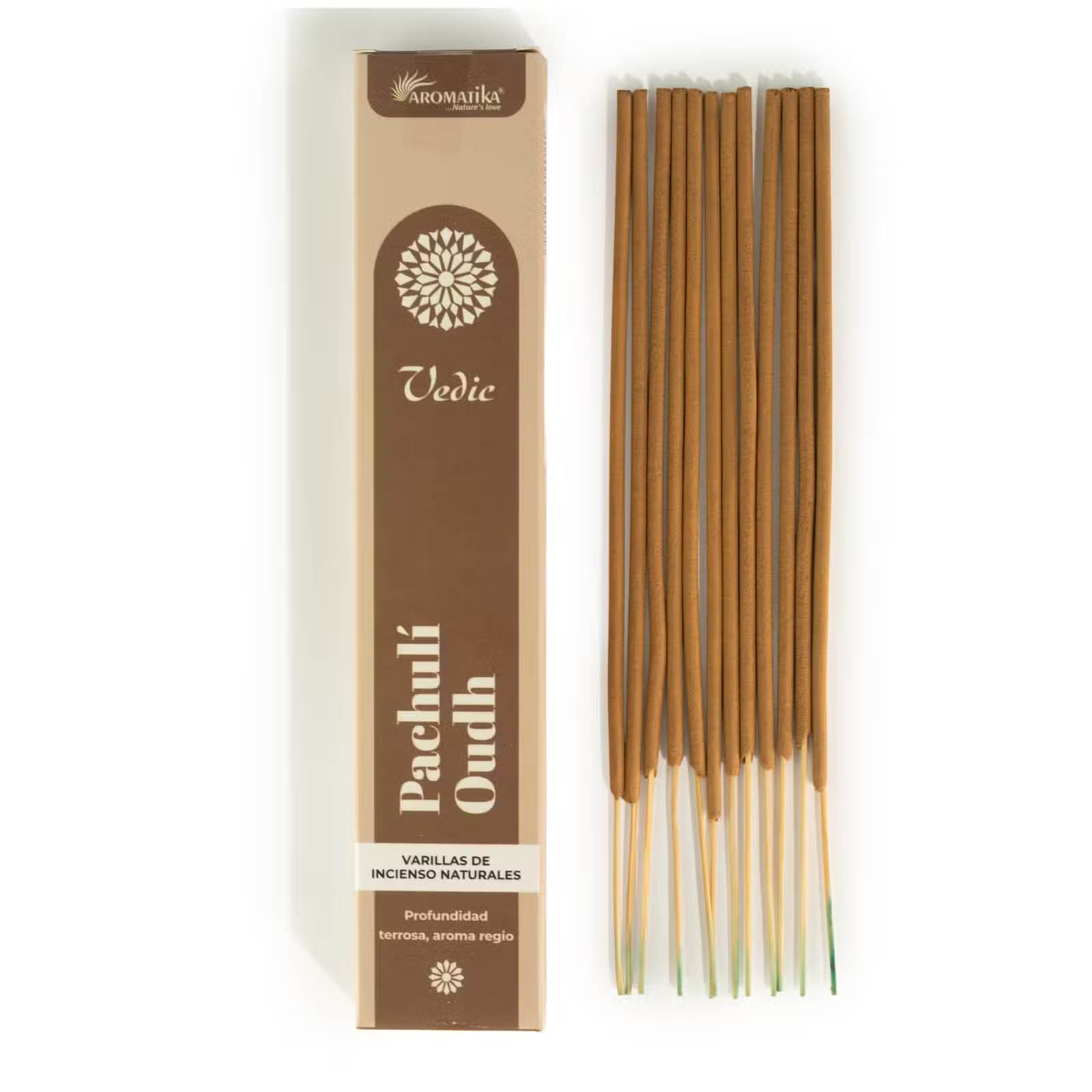
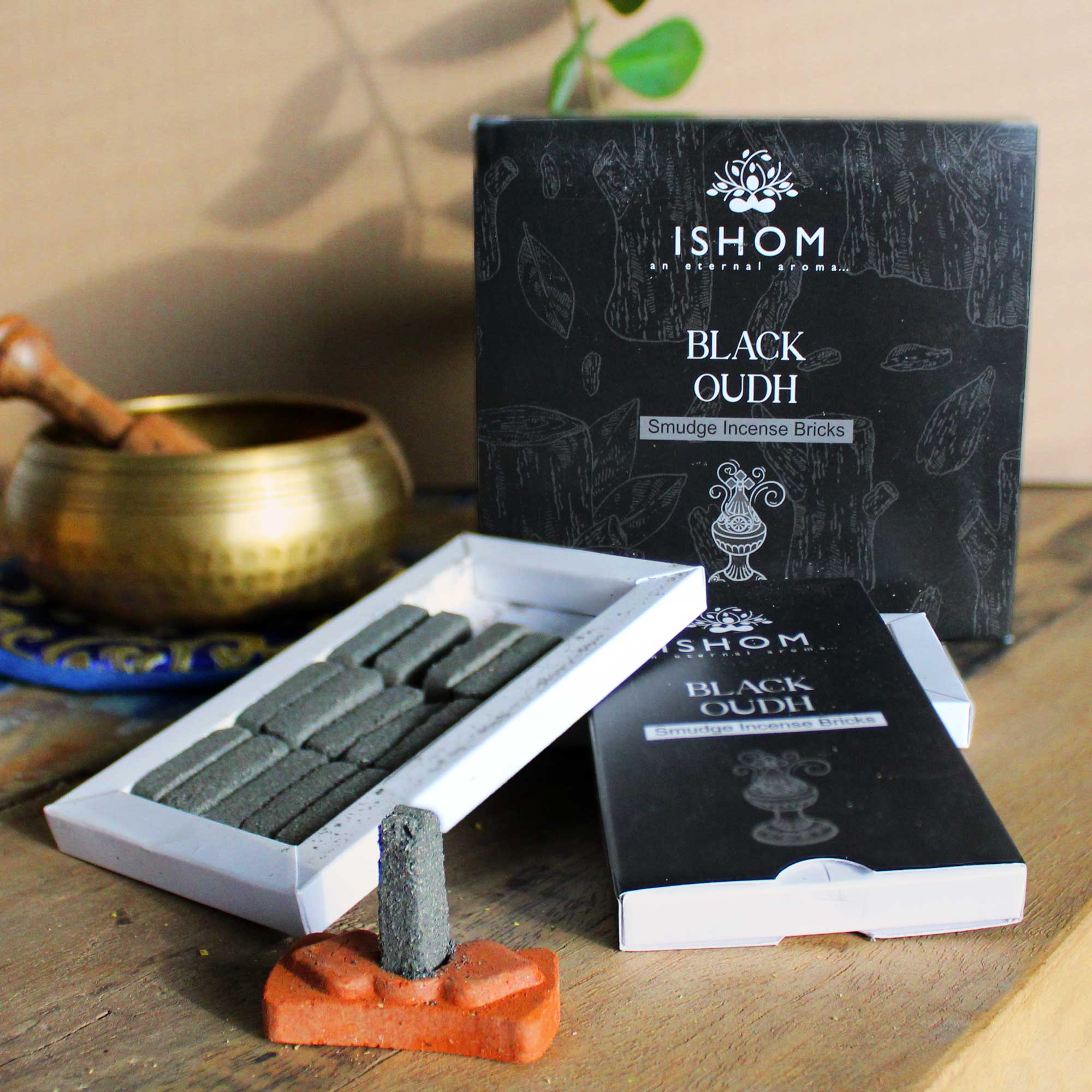
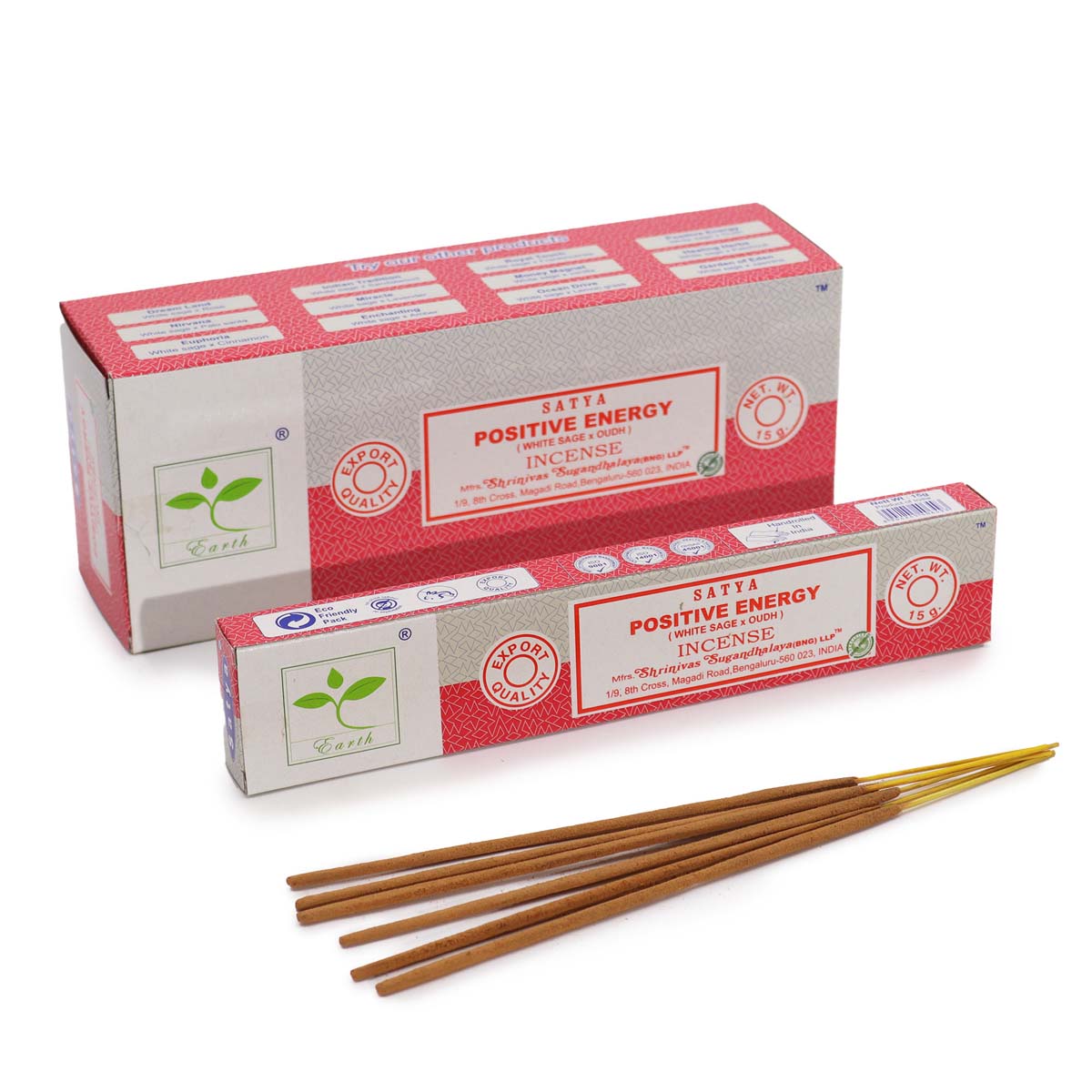
Oud and agarwood have a particularly long association with incense. Agarwood chips have traditionally been burned for their fragrance, while modern incense sticks and cones frequently recreate or reinterpret the same woody, resinous aroma.
Oud incense is a good choice when you want something richer than the lighter floral or citrus fragrances commonly found in incense.
You may also see terms such as agarwood incense, oudh incense or simply oud incense. The exact fragrance can vary considerably between brands and blends, so it is worth looking at the accompanying scent notes rather than choosing by the word “oud” alone.
Oud incense is a good choice when you want something richer than the lighter floral or citrus fragrances commonly found in incense.
You may also see terms such as agarwood incense, oudh incense or simply oud incense. The exact fragrance can vary considerably between brands and blends, so it is worth looking at the accompanying scent notes rather than choosing by the word “oud” alone.


Oud in Home Fragrance
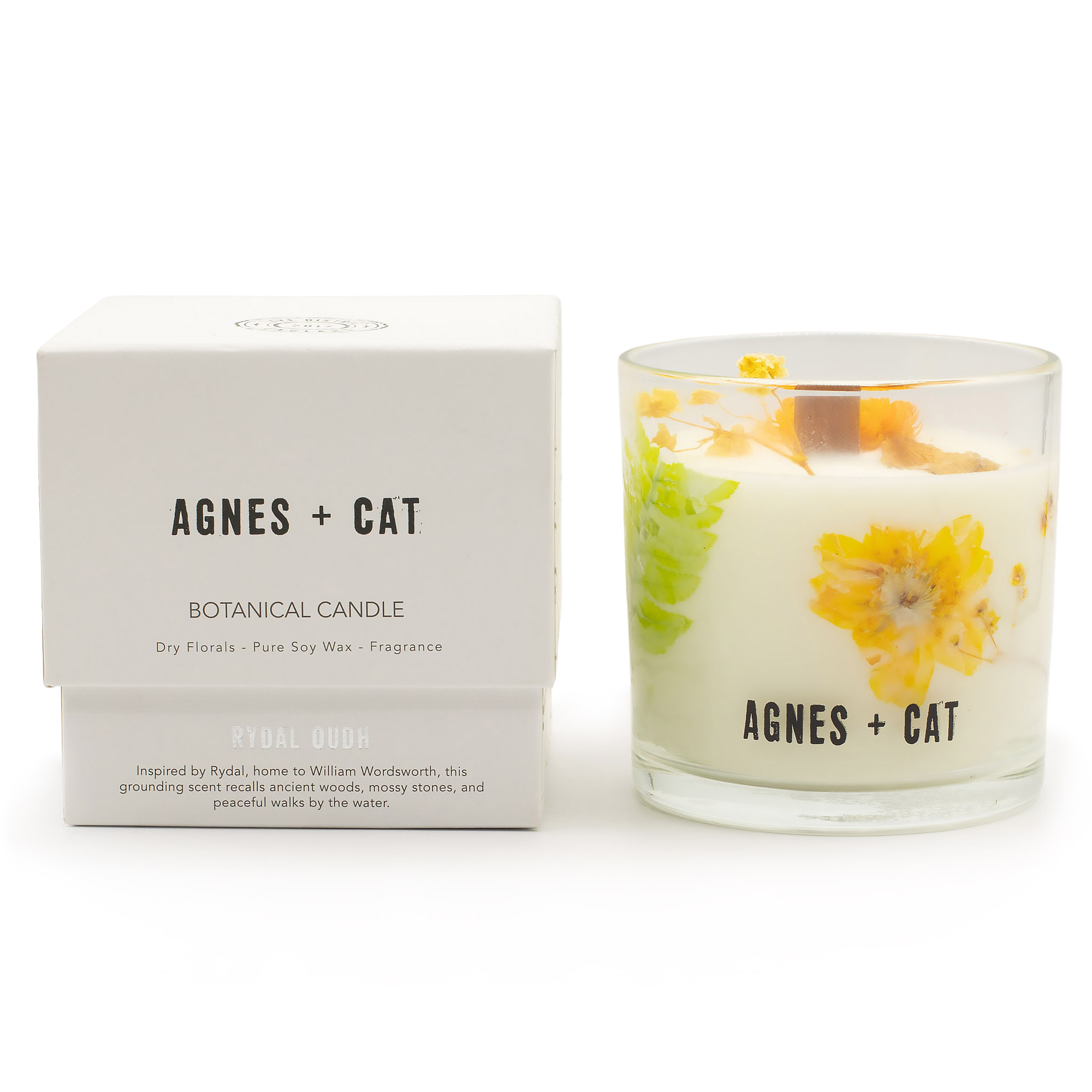
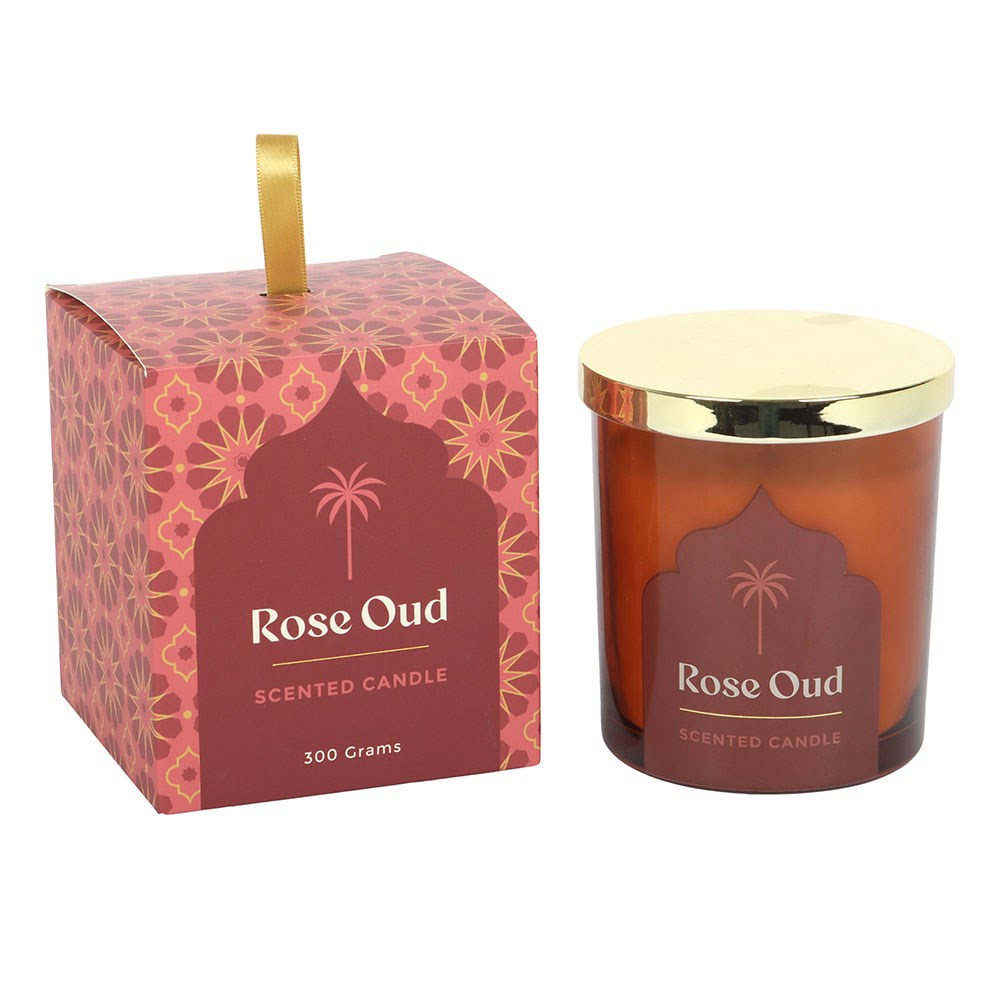
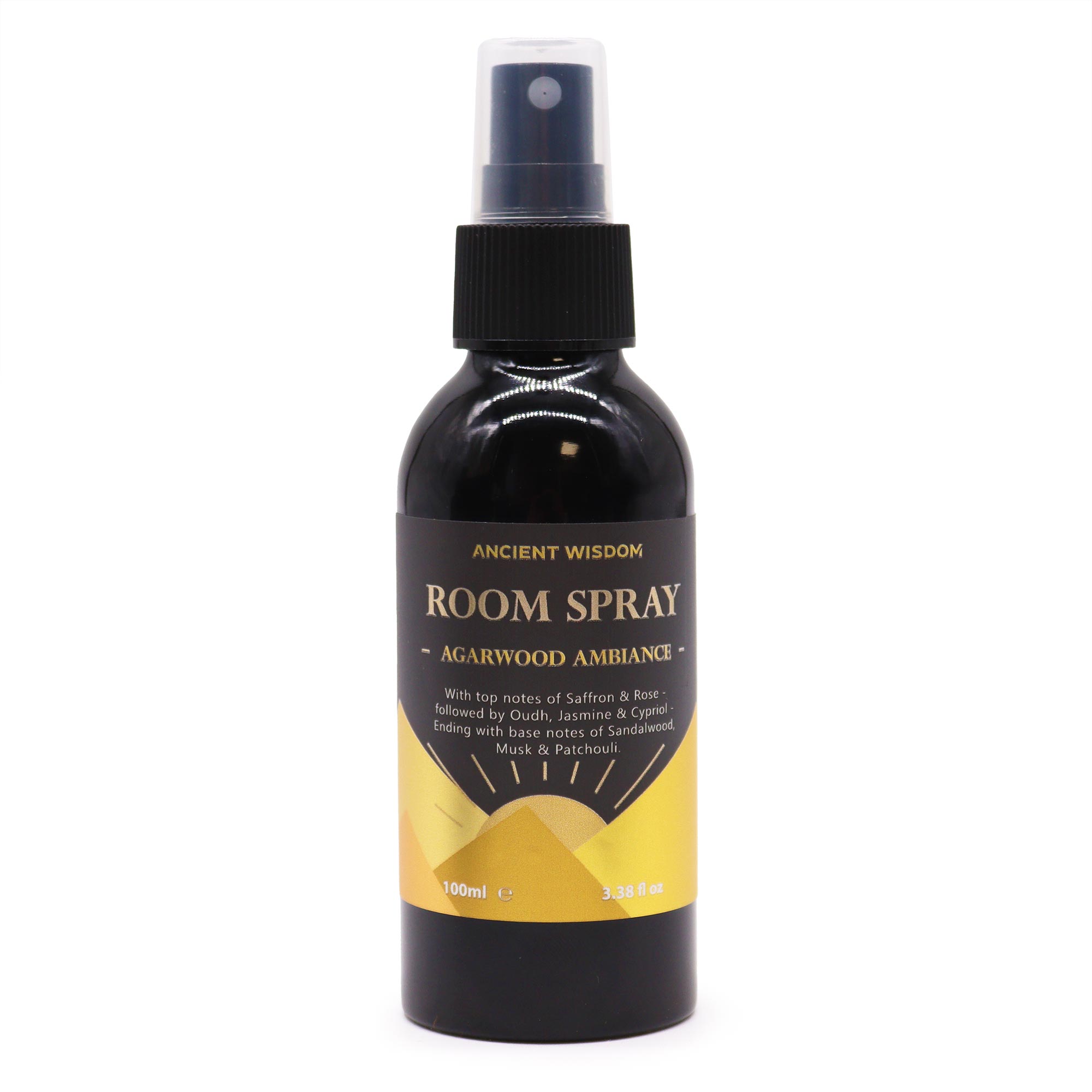
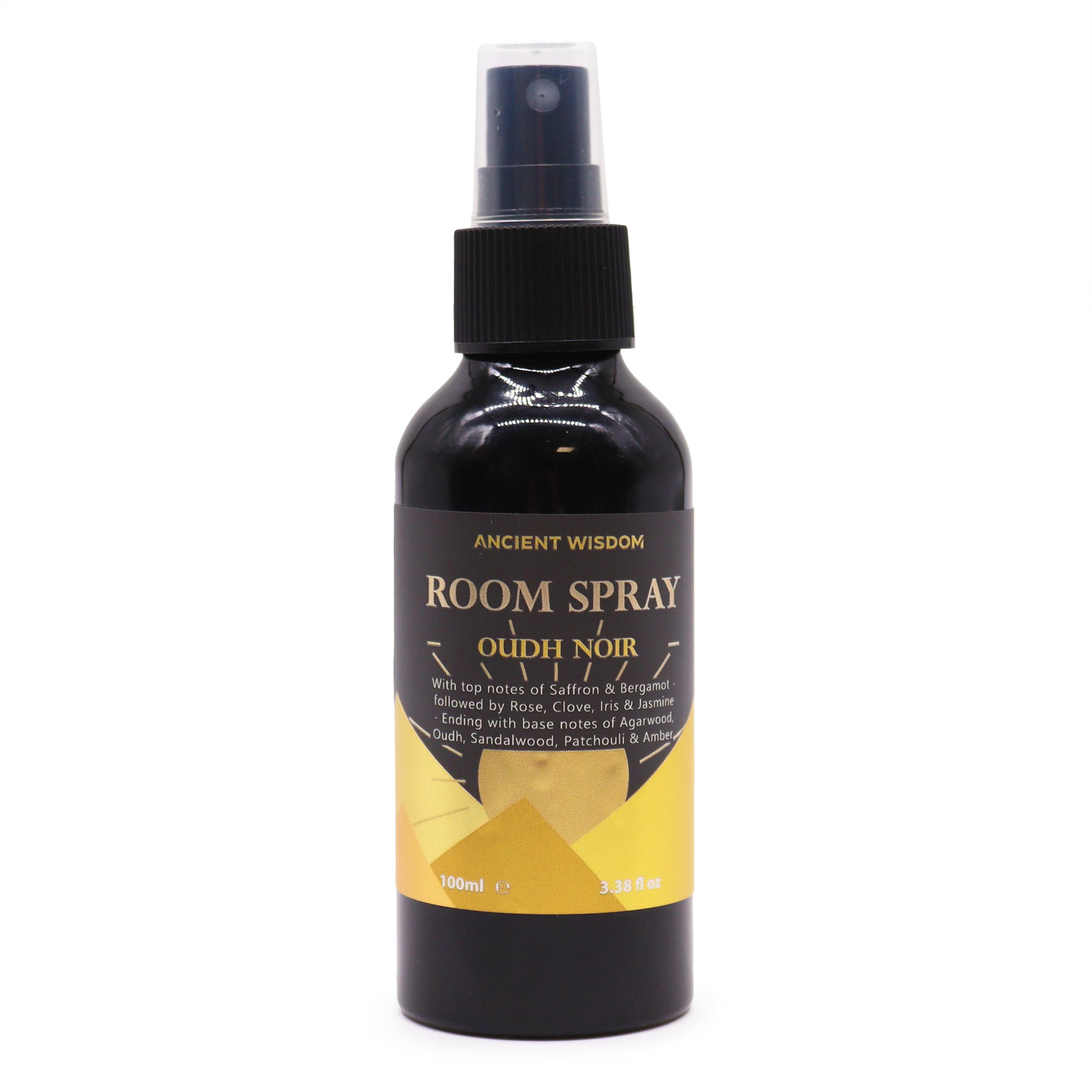
Oud is not limited to traditional incense. Its warm character works particularly well across modern home-fragrance products including room sprays, candles, wax melts and diffusers.
A room spray gives you a quick burst of fragrance, while candles and wax melts can provide a slower, more atmospheric scent experience. Diffusers offer another option when you would prefer continuous background fragrance without burning anything.
For a smaller room, you may prefer an oud blend with softer floral, vanilla or sandalwood notes. In larger rooms, deeper amber, musk or smoky oud fragrances can make more of an impact.
A room spray gives you a quick burst of fragrance, while candles and wax melts can provide a slower, more atmospheric scent experience. Diffusers offer another option when you would prefer continuous background fragrance without burning anything.
For a smaller room, you may prefer an oud blend with softer floral, vanilla or sandalwood notes. In larger rooms, deeper amber, musk or smoky oud fragrances can make more of an impact.
Is Oud Only a Winter Fragrance?
Oud is especially popular during autumn and winter because its warmth naturally suits darker evenings and cosy interiors, but there is no reason to reserve it for colder weather.
Lighter oud blends paired with rose, citrus or softer florals can work throughout the year. As with most home fragrance, the best choice comes down to the atmosphere you want to create rather than a particular season.
Lighter oud blends paired with rose, citrus or softer florals can work throughout the year. As with most home fragrance, the best choice comes down to the atmosphere you want to create rather than a particular season.
How to Choose an Oud Fragrance
If you are trying oud for the first time, look beyond the word “oud” and check the other fragrance notes in the product.
Choose oud and rose if you enjoy floral fragrances with more depth.
Try oud and sandalwood for something smoother and creamier.
Look for oud, amber or musk if you enjoy warm and enveloping scents.
Choose smoky or resinous oud if you already enjoy incense and deeper woody fragrances.
Try an oud blend with sweeter notes if you want an easier introduction to the fragrance.
If you have never experienced oud before, starting with a room spray, incense pack or wax melt can also be an easy way to discover which style you prefer.
A Fragrance With Real Depth
Oud is difficult to reduce to a single scent description, and that is precisely what makes it interesting. Woody, resinous, smoky, sweet and sometimes floral, it can change dramatically depending on what it is blended with.
Whether you prefer traditional incense or contemporary home fragrance, oud offers something noticeably different from lighter everyday scents. Explore a few different combinations and you may discover that your favourite oud is very different from the one you expected.
Whether you prefer traditional incense or contemporary home fragrance, oud offers something noticeably different from lighter everyday scents. Explore a few different combinations and you may discover that your favourite oud is very different from the one you expected.
 Login to Leave the First Comment
More articles you may enjoy:
Furry Friends & Fragrance: The Ultimate Guide to Pet-Safe Home Scents
Posted: June 22, 2026

The Ethical Side of Scent: Why What You Burn Matters
Posted: June 21, 2026

Essential Oils vs Fragrance Oils: Which One Should You Buy?
Posted: January 8, 2026

Bath Bombs vs Shower Steamers: Which Self-Care Treat is Right for You?
Posted: December 10, 2025